Launching a tea brand is exciting, but one of the biggest areas of confusion for founders is manufacturing.
Many early stage brands assume all tea manufacturers operate the same way. In reality, manufacturers are built for very different business models, production scales, and stages of growth.
Some specialize in:
• small pilot runs
• flexible inventory introductions
• higher per unit pricing
• startup testing
Others are designed for:
• scalable production
• customized formulations
• operational efficiency
• long term manufacturing growth
There are also consultants and brokerage style partners who work between brands and manufacturers, helping founders navigate sourcing, formulation, packaging, production coordination, and commercialization. For many early stage brands, this added hands on support can be extremely valuable when learning how the industry works and avoiding costly mistakes.
At the same time, it is important for brands to understand whether they are working directly with a manufacturer or through a broker structure with added markups layered into the process.
Custom Co-Pak operates as a direct manufacturing and development partner, allowing brands to work directly through formulation, sourcing, blending, and production without additional broker markups between the client and manufacturing process.
Neither model is wrong. They simply serve different stages of business and different levels of support needs.
Understanding the difference early can save founders significant time, money, frustration, and costly production mistakes.
One of the most common misconceptions is assuming that low initial inventory automatically means lower startup costs.
In reality, very small production runs often come with:
• higher cost per unit
• limited packaging options
• less automation
• reduced sourcing flexibility
• fewer customization opportunities
On the other hand, larger scale manufacturing creates efficiencies through:
• automation
• bulk ingredient purchasing
• packaging economies
• machine setup optimization
• production scheduling
This is why many custom tea manufacturers have minimum order quantities, commonly referred to as MOQs.
MOQs are not arbitrary numbers. They exist because manufacturing involves multiple operational layers beyond simply filling tea bags.
Typical considerations include:
• machine setup and calibration
• packaging procurement
• custom printing minimums
• ingredient sourcing
• labor allocation
• production scheduling
• warehousing and logistics
For example, custom printed packaging suppliers often require minimum print quantities before production becomes cost effective.
Similarly, pyramid tea bag machinery is designed for scalable production runs rather than ultra small hand packed quantities.
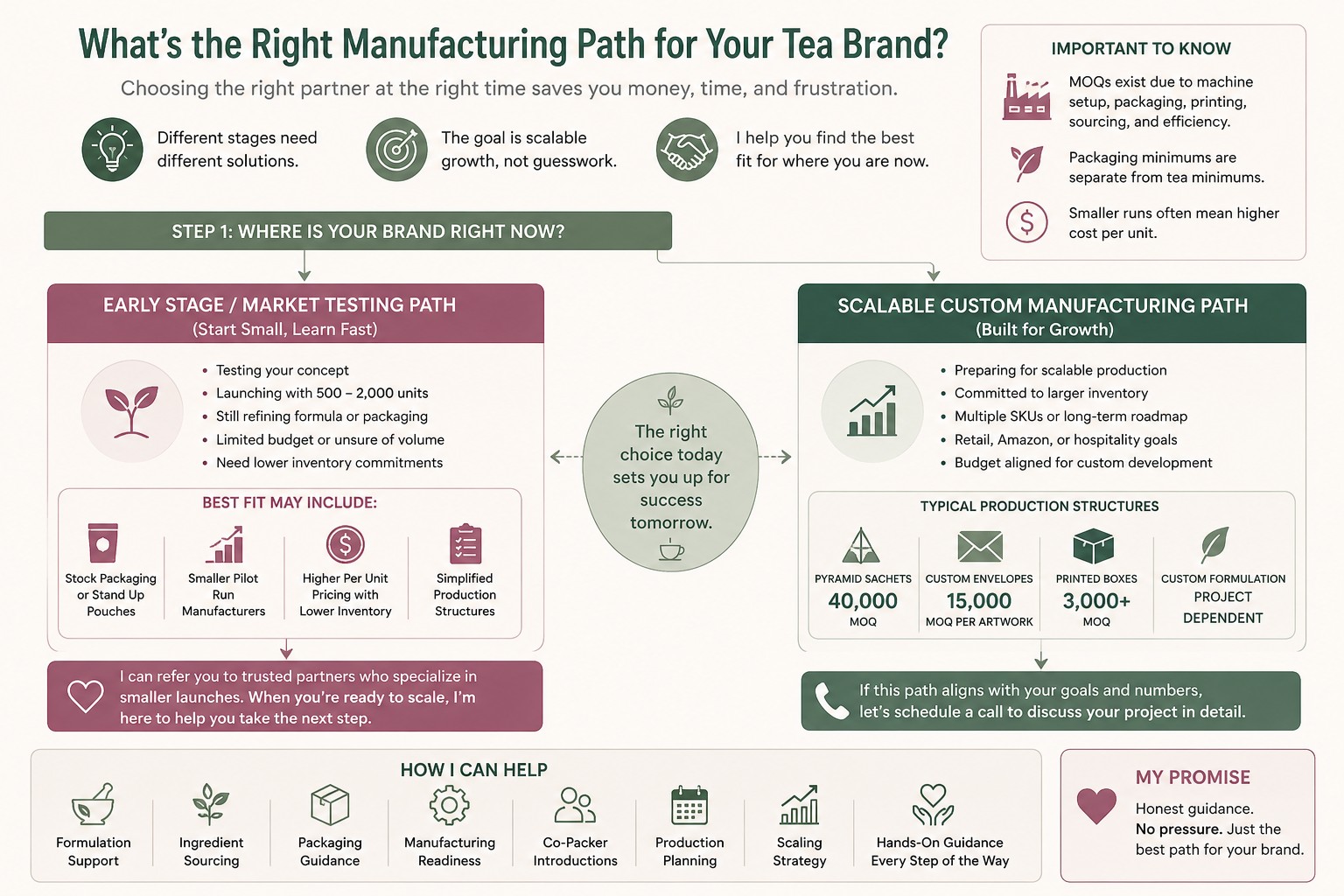
While every project is different, these are common production structures for customized tea programs:
| Component | Typical MOQ |
| Pyramid Sachets | 40,000 tea bags |
| Custom Envelopes | 15,000 per artwork |
| Printed Retail Boxes | 3,000+ |
| Custom Formulation | Project dependent |
| Organic / Functional Ingredients | Higher sourcing complexity and lead times |
These structures are generally designed for brands preparing to scale into:
• retail
• Amazon
• hospitality
• foodservice
• wholesale distribution
Not every brand should begin with large inventory commitments.
In many cases, startup founders benefit from:
• validating the market first
• simplifying packaging
• reducing initial SKU counts
• testing customer response
• refining positioning before scaling
Smaller pilot run manufacturers can often provide:
• lower inventory minimums
• stock packaging
• simplified production
• faster early stage testing
The tradeoff is usually:
• higher cost per unit
• fewer customization options
• less manufacturing efficiency
For many early stage founders, this can still be the right path initially.
You may be ready for larger scale custom manufacturing if:
You may benefit from a smaller pilot manufacturer first if:
Both approaches can be valid depending on your goals, timeline, and available resources.
I work with brands across multiple stages of development, including:
• formulation support
• ingredient sourcing
• commercialization guidance
• packaging direction
• manufacturing readiness
• co pack introductions
• scaling strategy
In some cases, Custom Co-Pak may be the right operational fit.
In other situations, I may recommend startup friendly manufacturing paths first so brands can validate and grow before transitioning into larger scale production.
I also work hands on with brands that need additional guidance navigating the process, helping bridge the gap between concept, sourcing, packaging, and manufacturing execution.
The goal is not simply to manufacture product.
The goal is helping brands build sustainable, scalable systems that align with where they are today and where they want to grow tomorrow.
If you are exploring a tea project and would like guidance on the best manufacturing path for your current stage, feel free to reach out through my contact page.